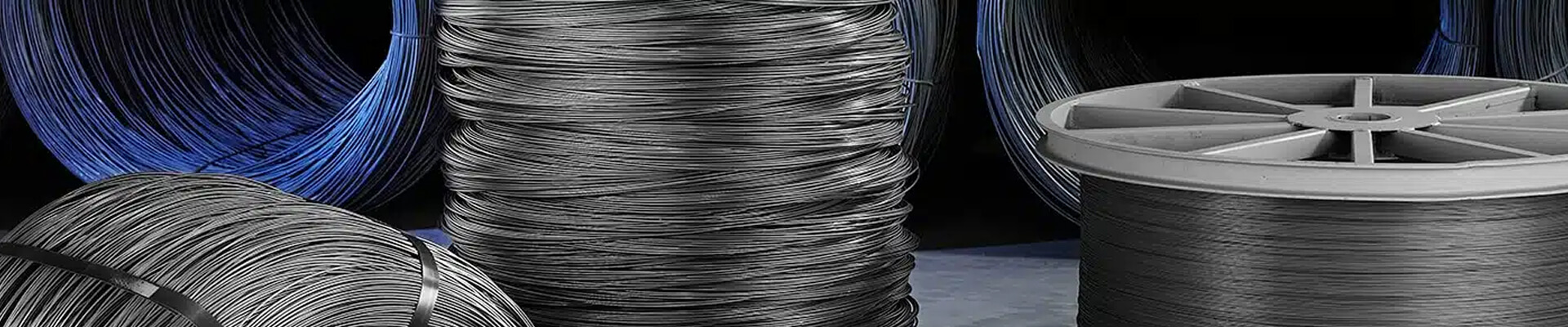
How Flat Ties and Wedge Pins Improve Aluminum Formwork Installation
How Flat Ties and Wedge Pins Improve Aluminum Formwork Installation
Aug 21, 2026
Aluminum formwork is widely used for repetitive concrete construction because modular panels can form walls, columns, beams and slabs with consistent geometry. However, the panels alone do not determine the quality of the system. Small connection components such as Flat Ties, Wedge Pins and Stub Pins directly influence spacing, alignment, assembly speed and compatibility from one construction cycle to the next.
The American Concrete Institute describes formwork as a temporary structure that molds concrete to the required size and shape, controls its position and alignment, and supports fresh concrete together with construction loads. This explains why formwork accessories cannot be treated as ordinary low-value hardware: their dimensions and fit must correspond to the approved formwork design.
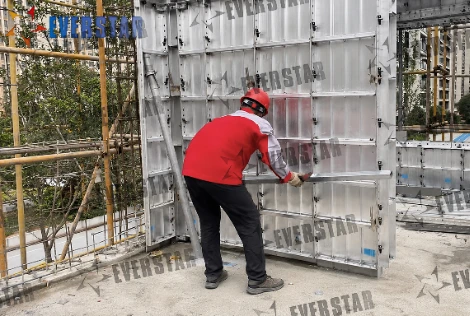
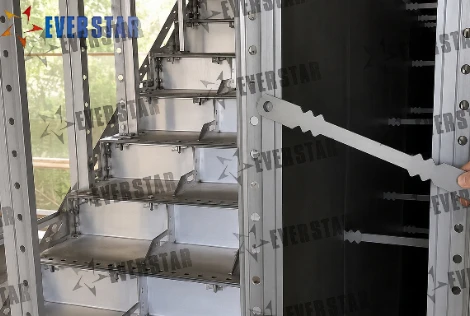
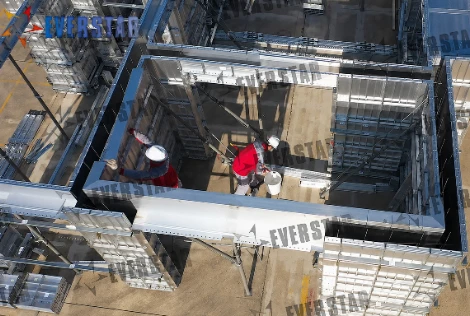
Suggested article images, left to right: Aluminum wall formwork installation on a concrete building project; Thin silver-white flat tie locked with a solid tapered wedge pin; Dimensional inspection of flat ties before shipment.
What Does an Aluminum Formwork Flat Tie Do?
A Flat Tie passes between opposite wall-form panels and helps maintain the designed distance while the formwork is assembled and concrete is placed. Its effective length therefore relates to the required wall thickness and the geometry of the panel connection. If the tie is too short, too long or inconsistent from piece to piece, the panel spacing and finished wall thickness may deviate from the drawing.
EVERSTAR Flat Ties have a natural silver-white metallic appearance. They are produced by flattening steel wire rod, followed by straightening, precision punching and forming. They are not described as galvanized products. Overall length, flattened width, thickness, slot dimensions and slot position can be customized according to drawings, physical samples and the customer’s existing panel system.
How Wedge Pins and Stub Pins Complete the Connection
The punched slot at the end of a Flat Tie must match the Wedge Pin that locks the connection. A solid tapered Wedge Pin is inserted through the aligned opening so that its geometry tightens the joint. Stub Pins are commonly used at compatible panel connections. When these parts are supplied as a matched group, workers can assemble and dismantle the formwork more consistently than when accessories from unrelated sources have different dimensions.
A connection that looks similar in a catalog may still be incompatible. Small differences in tie thickness, slot width, pin taper, head form or panel-hole size can slow installation, create loose joints or require unsafe site modification. For this reason, professional procurement should begin with an approved drawing or reference sample instead of relying only on a product name.
Key Dimensions Buyers Should Confirm
For Flat Ties, confirm the overall length, effective length, width, thickness, end profile, number of slots, slot length, slot width and distance from the slot to the tie end. Also define material and mechanical requirements, dimensional tolerance, burr limits, straightness and packing quantity. For Wedge Pins and Stub Pins, confirm every dimension that affects insertion and locking, including thickness, taper, length, head geometry and mating opening.
The supplier should conduct trial assembly with the actual matched components or a verified gauge. A sample approval stage is especially valuable when the buyer is replacing a former supplier, using a proprietary panel design or purchasing several accessories together.
Quality Control From Raw Material to Trial Assembly
Incoming material inspection should verify the agreed raw-material dimensions and surface condition. During flattening and punching, production teams should monitor width, thickness, straightness, slot position and edge quality. Finished Flat Ties should be checked for deformation, excessive burrs and inconsistent openings. Wedge Pins and Stub Pins should be checked for dimensional consistency and proper fit.
Mechanical testing can be arranged according to the approved order requirements, but test methods and acceptance values must be agreed before production. Trial assembly is equally important because dimensional values on separate inspection reports do not always reveal how a group of parts behaves when installed together.
Installation and Safety Remain Project Responsibilities
Correct accessories support efficient installation, but they do not replace engineered formwork design, bracing, supervision or site inspection. Concrete pressure, pour rate, panel condition and construction loads must all be addressed by qualified project personnel. OSHA requirements for cast-in-place concrete include inspection of erected shoring immediately before, during and after concrete placement; applicable local rules and the approved formwork plan always take priority.
EVERSTAR supports drawing-based and sample-based development of Flat Ties, Wedge Pins, Stub Pins and other formwork accessories. With dimensional inspection, matched production, trial assembly and export packing, buyers can establish a more repeatable supply chain for high-rise residential, apartment and commercial concrete projects.
Buyer Checklist
● Required concrete wall thickness and formwork panel model
● Flat Tie length, width, thickness, slot size and slot position
● Wedge Pin and Stub Pin dimensions and mating geometry
● Material, mechanical requirement, tolerance and burr limit
● Approved drawing or sample, trial assembly and packaging quantity
Image ALT Text
● Image 1: Workers installing aluminum formwork panels for concrete walls
● Image 2: Aluminum formwork flat tie and wedge pin connection detail
● Image 3: Factory inspector measuring aluminum formwork flat ties
Reference Sources
Use these sources for editorial verification; confirm applicable local regulations and current standard editions before publication or project use.
● American Concrete Institute - Formwork for concrete topic
Ready To Work With Us?
Navigation
Navigation
Contact Us
Phone: +86 0311 857 99988
Phone: +86 199 330 44444
Telephone: +86 199 330 44444
WhatsApp: +86 199 330 44444
Address:Qiji Industrial Zone, 052460, Wuji County, Shijiazhuangcity, Hebei Province, China.